Axolotl
Ambystoma mexicanum
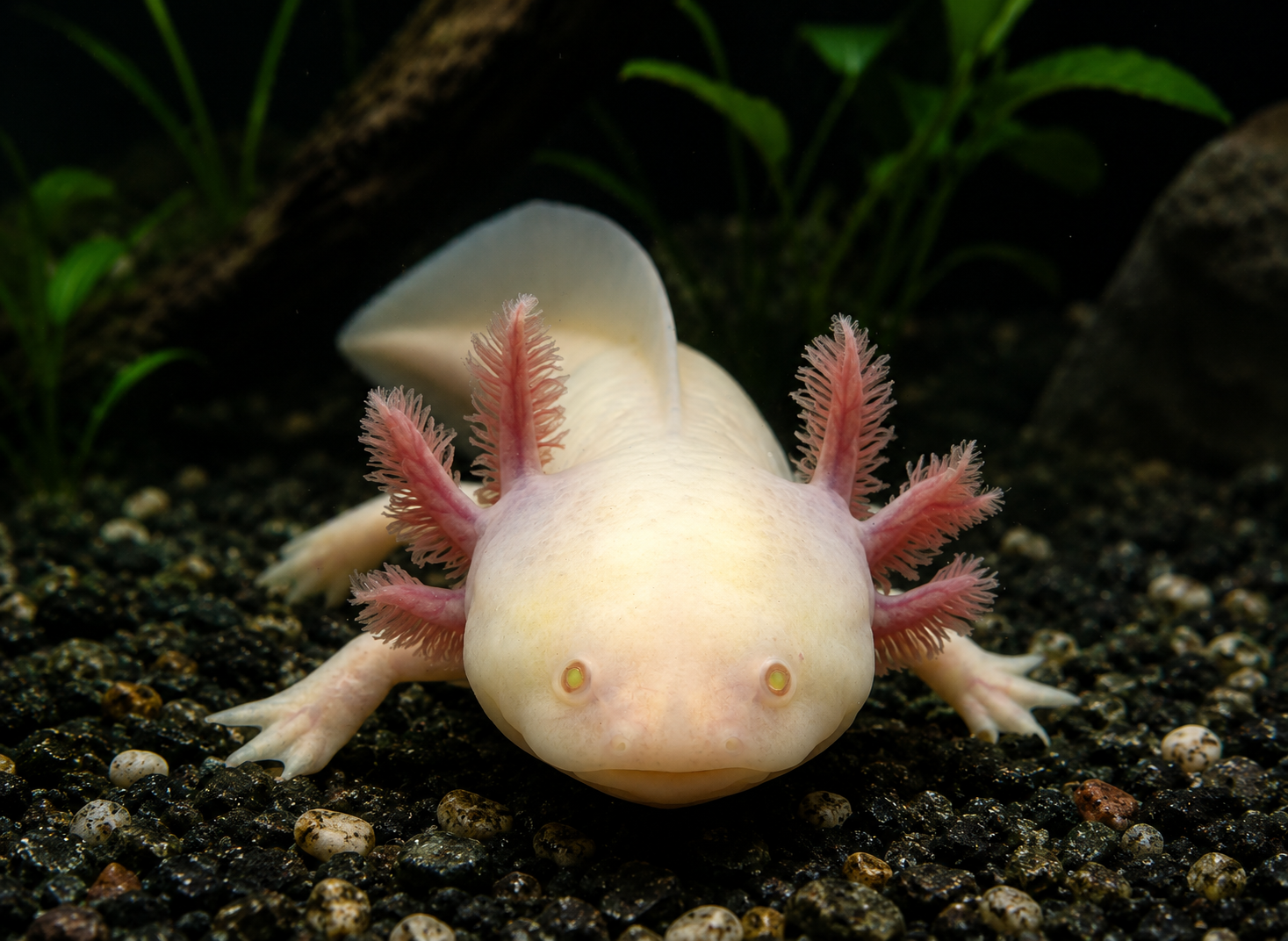
Axolotls are unusual fully aquatic salamanders known for their feathery external gills, expressive appearance, and calm demeanor. Often called “Mexican walking fish,” axolotls are not fish. They are amphibians that remain aquatic throughout their lives.
Axolotls are available in a variety of color morphs. Common varieties include wild-type, leucistic, albino, golden albino, melanoid, and copper axolotls. Coloration, markings, and gill appearance can vary significantly between individual animals, making each axolotl unique.
These fascinating amphibians are also known for their ability to regenerate damaged limbs and portions of their tail. Despite this remarkable capability, axolotls are delicate animals that require a properly cycled cold-water aquarium and stable water conditions.
With the correct setup, axolotls make distinctive freshwater display animals for aquarists prepared to meet their specialized care requirements.
Axolotl Care Guide
Adult Size and Lifespan
Adult axolotls commonly reach approximately 9–12 inches in length, although some individuals may grow larger.
With proper care, axolotls commonly live 10–15 years and may live even longer.
Aquarium Size
A single adult axolotl should be kept in an aquarium with a minimum capacity of 20 gallons, although a larger aquarium is strongly recommended. A 20-gallon long, 29-gallon, or 40-gallon breeder aquarium provides additional bottom area and makes it easier to maintain stable water quality.
Axolotls spend most of their time walking or resting on the bottom of the aquarium, so floor space is more important than aquarium height.
For multiple axolotls, provide additional aquarium space and only house animals of a similar size together. Axolotls are often best kept individually because they may accidentally nip one another, particularly during feeding.
Water Temperature
Axolotls are cold-water animals and should not be kept in a tropical aquarium.
Recommended temperature: 60–68°F
Preferred range: approximately 60–65°F
Avoid sustained temperatures above: 70–72°F
Warm water can cause stress, appetite loss, fungal infections, and other health problems. In warmer rooms, an aquarium fan or dedicated aquarium chiller may be necessary.
Keep the aquarium away from direct sunlight, heating vents, and other heat sources. A heater is generally not required.
Water Parameters
Axolotls are sensitive to poor water quality. The aquarium must be fully cycled before an axolotl is introduced.
| Parameter | Recommended Range |
|---|---|
| Temperature | 60–68°F |
| pH | 6.5–8.0 |
| Ammonia | 0 ppm |
| Nitrite | 0 ppm |
| Nitrate | Keep as low as practical; preferably below 20–40 ppm |
Always use a water conditioner that neutralizes chlorine and chloramine when adding tap water. Test the aquarium water regularly with a reliable aquarium test kit.
Perform routine partial water changes and remove uneaten food or visible waste promptly. A weekly water change of approximately 20–30% is a reasonable starting point, although the necessary frequency will depend on aquarium size, filtration, and stocking level.
Filtration and Water Flow
Use a properly cycled aquarium filter with gentle water movement. Axolotls do not tolerate strong currents well. Excessive water flow can cause stress and may damage their delicate external gills.
Suitable filtration options include:
- Sponge filters
- Baffled hang-on-back filters
- Canister filters with reduced or diffused flow
Choose a filter that provides adequate biological filtration without creating a strong current across the aquarium.
Substrate
The safest substrate choices are:
- Bare-bottom aquarium
- Fine aquarium sand
- Large, smooth stones that cannot fit inside the axolotl’s mouth
Do not use standard aquarium gravel, small pebbles, or loose stones that could be swallowed. Axolotls feed by suction and may accidentally ingest substrate while eating. Swallowed gravel can cause a dangerous intestinal blockage.
Bare-bottom aquariums are especially appropriate for young axolotls and are generally the easiest to keep clean.
Hides, Lighting, and Décor
Provide at least one dark hiding place where the axolotl can retreat. Smooth caves, aquarium-safe hides, and PVC pipe sections work well.
Axolotls prefer subdued lighting. Bright lights should be avoided unless the aquarium includes shaded areas and adequate hiding places.
Live or artificial plants may be used, but all decorations should be smooth and free of sharp edges that could damage the axolotl’s skin or gills. Any decorative item placed in the aquarium should be too large for the axolotl to swallow.
Feeding
Axolotls are carnivores and should receive a varied, high-protein diet.
Recommended staple foods include:
- Earthworms or nightcrawlers
- High-quality sinking axolotl pellets
- High-quality sinking carnivore pellets
- Salmon pellets formulated for aquatic animals
Supplemental foods may include:
- Blackworms
- Bloodworms
- Brine shrimp
- Appropriately sized pieces of thawed seafood or fish
Earthworms and quality sinking pellets are generally the best staple foods for adult axolotls. Bloodworms and brine shrimp are better suited as supplemental foods or for smaller juveniles rather than as the sole diet for adults.
Feeding Frequency
| Axolotl Size | Feeding Schedule |
|---|---|
| Young juveniles | Feed daily |
| Larger juveniles | Feed daily or every other day |
| Adults | Feed every 2–3 days |
Remove uneaten food after feeding to prevent water-quality problems. Feeding with aquarium tongs can help keep food away from the substrate and make cleanup easier.
Tank Mates
Axolotls are best kept alone or with other similarly sized axolotls in a sufficiently large aquarium.
Avoid keeping axolotls with fish, shrimp, snails, or other aquatic animals. Small tank mates may be eaten, while fish may nip at an axolotl’s gills. Tank mates can also introduce parasites or increase the amount of waste in the aquarium.
Handling
Axolotls should not be handled unless absolutely necessary. Their skin and external gills are delicate, and handling can cause stress or injury.
When an axolotl must be moved, guide it into a smooth aquarium-safe container while keeping it submerged in water.
Signs of Stress or Illness
Monitor your axolotl regularly for changes in appearance or behavior. Potential warning signs include:
- Loss of appetite
- Persistent floating or difficulty remaining on the bottom
- Forward-curled gills
- A tightly curled tail tip
- White, fuzzy growth on the skin or gills
- Redness, sores, or skin irritation
- Unusual swelling or bloating
- Sudden lethargy
- Gill deterioration
Many axolotl health problems are related to excessive heat, poor water quality, strong currents, or inappropriate substrate. Test the aquarium water and review the setup immediately if unusual symptoms appear. Contact an experienced exotic-animal veterinarian when symptoms persist or appear severe.
Care Summary
| Care Requirement | Recommendation |
|---|---|
| Scientific name | Ambystoma mexicanum |
| Adult size | Approximately 9–12 inches |
| Lifespan | Commonly 10–15 years or longer |
| Temperament | Generally calm; often best kept alone |
| Aquarium size | 20 gallons minimum for one adult; larger preferred |
| Temperature | 60–68°F |
| Water flow | Gentle |
| Substrate | Bare bottom, fine sand, or stones too large to swallow |
| Diet | Carnivorous; worms and sinking pellets recommended |
| Lighting | Low to moderate with shaded hiding areas |
| Difficulty level | Intermediate |
Important Note Before Purchasing
Axolotls require a fully cycled cold-water aquarium before arrival. They should not be purchased as impulse pets or placed into a newly established aquarium.
Confirm that you can maintain an appropriate aquarium temperature year-round, especially during summer.
Laws regarding axolotl ownership may vary by state, province, or locality. The buyer is responsible for confirming that axolotl ownership is permitted in their area before placing an order.