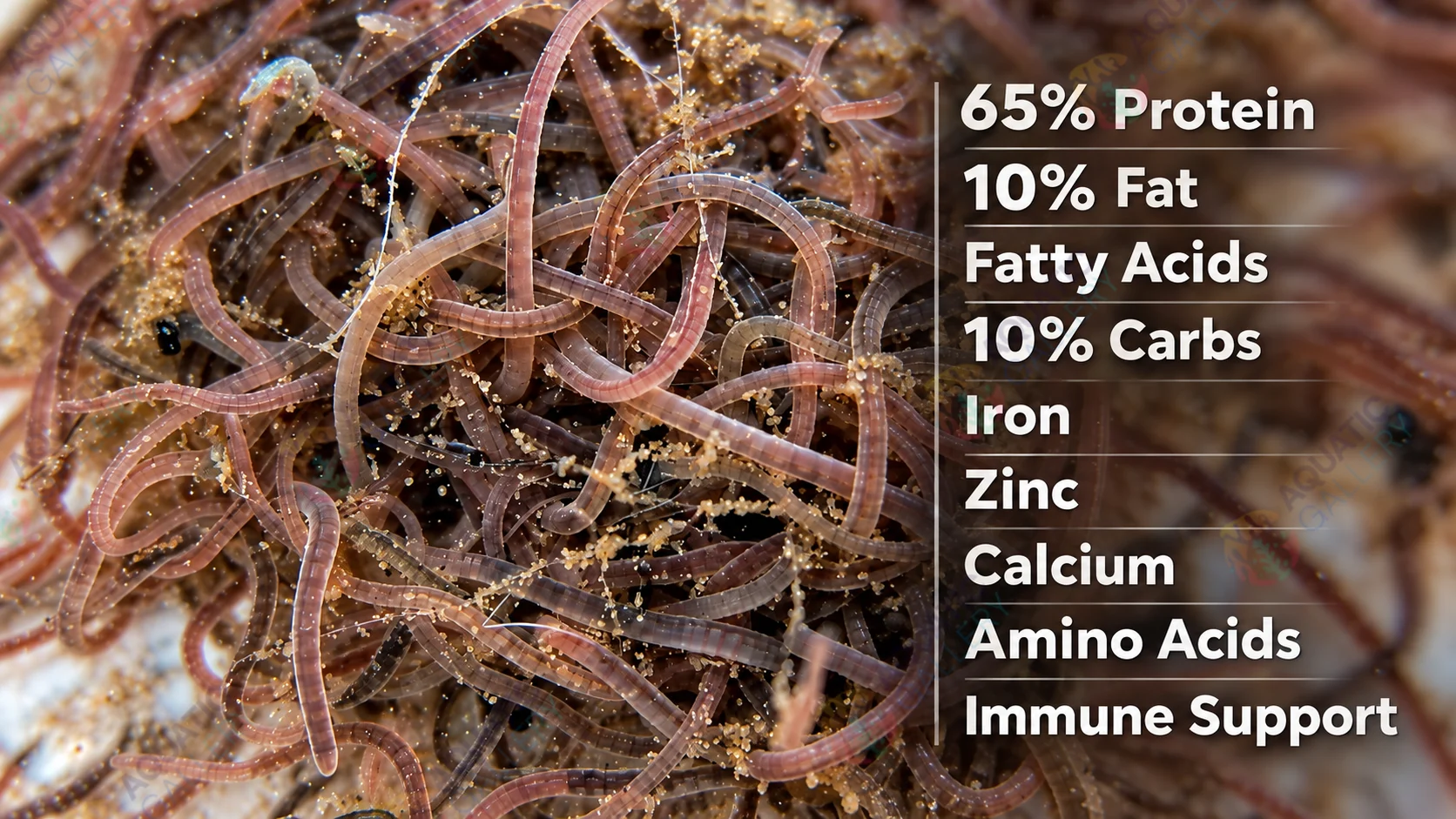
California Blackworms (Lumbriculus variegatus) are widely regarded as the gold standard of live aquarium food for both freshwater and marine systems. Our blackworms are 100% greenhouse cultured, produced in controlled environments, and guaranteed flying insect larval-free. Leeches may still be present, but most fish find these as nutritious snacks as well. This results in a cleaner, safer, and far more consistent live food suitable for even the most sensitive livestock.
Highly palatable and nutritionally dense, California Blackworms trigger immediate feeding responses in finicky eaters, newly imported fish, stressed specimens, and species that refuse frozen or prepared foods. Their slow, wriggling movement stimulates natural predatory instincts, making them invaluable for conditioning broodstock, initiating feeding in wild-caught fish, and maximizing breeding success.
Why California Blackworms Are the Best Live Aquarium Food
-
Extremely high acceptance rate – One of the few live foods eaten eagerly by almost all fish
-
Ideal for finicky or stressed fish – Proven to jump-start feeding in difficult species
-
Excellent for breeders – Promotes egg production, conditioning, and fry survival
-
Safe for freshwater and saltwater use – Rinse and feed directly
-
Larval-free, greenhouse cultured – No mosquitoes, parasites, or environmental contaminants
-
High protein, highly digestible – Minimal waste compared to many live foods
Unlike bloodworms or tubifex, properly cultured California blackworms are low odor, long-lived when stored correctly, and far less likely to foul aquarium water. They also don’t turn into flying insects as part of their natural lifecycle.
Uses in Freshwater and Saltwater Aquariums
Freshwater Applications
-
Conditioning and spawning of egg-layers and livebearers
-
Feeding wild-caught or newly imported fish
-
Stimulating appetite in sick or recovering fish
-
Ideal for cichlids, tetras, barbs, rasboras, discus, angelfish, gouramis, bettas, loaches, catfish, and native species
Saltwater Applications
-
Training finicky marine fish to eat
-
Conditioning broodstock for breeding programs
-
Excellent for wrasses, gobies, blennies, mandarins, pipefish, and other difficult feeders
-
Useful transitional food when converting fish to frozen or prepared diets
Blackworms can be fed directly, target-fed, or placed in feeding dishes to limit dispersal. In freshwater environments, they will survive in an aquarium setting and provide not only a great cleanup crew for uneaten fish waste, but also a naturally renewable source of high-quality, live, protein-rich food.
Care & Culture Guide (Storage and Short-Term Holding)
California blackworms are easy to maintain short-term when basic care guidelines are followed.
Temperature
-
Ideal: 38–55°F (3–13°C)
-
Refrigeration significantly extends lifespan
Water
-
Clean, dechlorinated freshwater. Spring water is best (but not distilled or RODI without remineralization)
-
Shallow water depth is preferred
-
Perform daily or every-other-day water changes
Flow & Oxygen
-
Gentle aeration recommended
-
Avoid strong flow that can damage worms
Light
-
Low light or darkness preferred
-
Avoid direct or intense lighting
Feeding (Optional for Longer Holding)
-
Finely powdered fish food or spirulina in very small amounts
-
Overfeeding will foul water quickly
Storage Tips
-
Rinse thoroughly before each feeding
-
Remove any dead worms promptly
-
Keep containers clean to prevent bacterial buildup
With proper care, blackworms can remain viable for several weeks.
Why Breeders Rely on Blackworms
Professional breeders consistently use California Blackworms to:
-
Increase spawning frequency
-
Improve egg viability
-
Enhance conditioning without excessive fat buildup
-
Encourage feeding in newly hatched or juvenile fish transitioning to larger foods
Their natural movement and nutritional profile closely mimic prey items fish evolved to consume, making them unmatched as a conditioning and breeding food.
If you need a clean, safe, ultra-effective live food, California Blackworms (Lumbriculus variegatus) remain the industry benchmark. Whether you are feeding finicky show fish, conditioning broodstock, or supporting sensitive marine species, nothing outperforms properly cultured California Blackworms in acceptance, nutrition, and results.
Clean. Greenhouse-cultured. Flying insect-free.
This is live food done right.